Are We Raising Problem Solvers or Answer Givers?
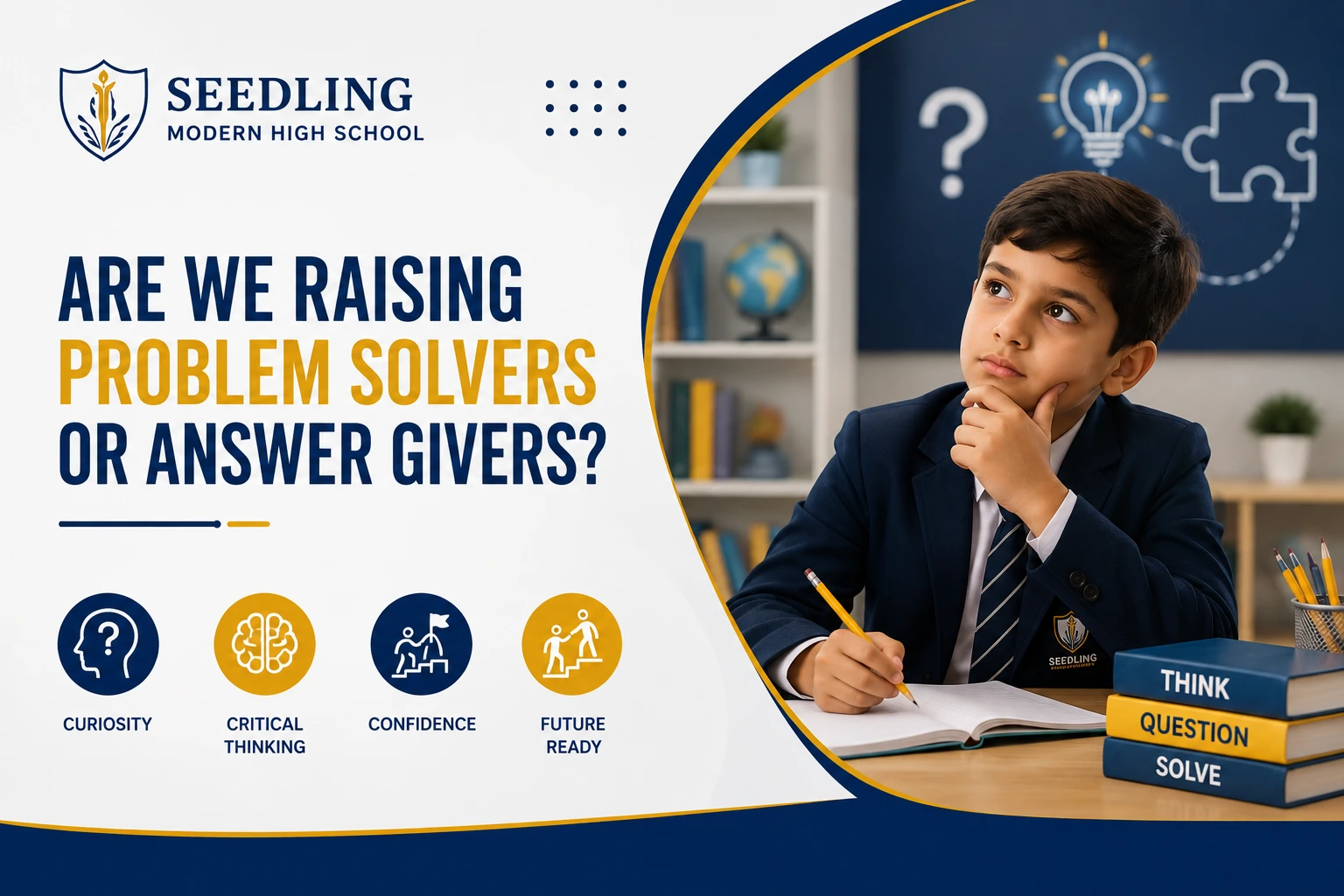
Parents often celebrate when children know the right answers. Schools reward correct responses, good grades, and high scores. But in a world where information is available within seconds, is simply knowing the answer enough?
Today’s children will enter careers that may not even exist yet. According to the World Economic Forum’s Future of Jobs Report 2025, analytical thinking, creative thinking, resilience, and problem-solving are among the most important skills employers expect over the coming years. This shift raises an important question: Are we preparing children to memorise answers, or are we helping them develop the problem-solving skills and critical thinking needed to become future-ready learners?
As education evolves to meet the demands of a changing world, understanding why problem-solving matters has never been more important.
In This Article
Why Problem-Solving Matters More Than Ever
It is much more than just getting the right answer from a textbook to be able to solve problems. It’s the ability to look at things closely, ask insightful questions, think about different perspectives, try out solutions, learn from mistakes, and adapt as things evolve. These skills help children move away from rote learning and grow into confident thinkers who can apply what they know to new or real-life contexts.
Admissions Open
Give Your Child the Best Start
Join Seedling Modern High School and unlock a world-class learning environment built for tomorrow's leaders.
Apply for Admission →As technology is changing the way we learn and work, critical thinking and complex problem-solving skills are becoming more and more important. Students who learn effective problem-solving skills are better able to face challenges with confidence and creativity, whether it’s working together on a school project, making decisions in their everyday lives or preparing for future careers.
Recognising this need, the National Education Policy (NEP) 2020 places significant emphasis on critical thinking, creativity, experiential learning, and inquiry-based education. Rather than encouraging rote memorisation, the policy advocates for learning environments where students explore ideas, ask questions, and develop practical solutions.
The objective is to nurture independent learners who can connect classroom knowledge with real-world experiences and continue learning throughout their lives.
To appreciate the value of this skill, it’s helpful to understand how problem solvers think differently from those who simply memorise answers.
Answer Givers vs Problem Solvers
The distinction between answer givers and problem solvers becomes clearer when we compare their approach to learning and everyday challenges.
| Aspect | Answer Giver | Problem Solver |
| Approach | Looks for the correct answer. | Understands the problem before finding a solution. |
| Thinking Style | Relies on memorisation and recall. | Uses critical thinking, analysis, and creativity. |
| Response to Challenges | Waits for instructions or examples. | Explores different ideas and tests solutions. |
| Learning Process | Focuses on results. | Values the learning journey, feedback, and improvement. |
| Real-Life Application | Applies known solutions. | Adapts knowledge to new and unfamiliar situations. |
Developing these abilities requires consistent opportunities to think, explore, and learn, both inside and outside the classroom.
How Schools Can Encourage Problem-Solving
Schools play a vital role in helping children become confident problem solvers by creating learning experiences that go beyond memorisation. Instead of providing ready-made answers, effective classrooms encourage students to explore ideas, ask questions, experiment with different approaches, and learn from the outcomes. This approach not only deepens conceptual understanding but also builds the confidence to tackle unfamiliar challenges.
Some of the most effective ways schools nurture problem-solving skills include:
- Project-based learning: Encourages students to apply classroom concepts to real-world situations, making learning more meaningful and practical.
- Collaborative learning: Group discussions and team activities expose students to diverse perspectives and teach them how to work together to find solutions.
- Open-ended questions: Tasks with multiple possible answers promote critical thinking, creativity, and logical reasoning instead of rote learning.
- Hands-on experiences: Experiments, design challenges, creative projects, and experiential activities allow students to test ideas, make observations, and improve through trial and error.
- Reflection and feedback: Encouraging students to review their successes, mistakes, and learning process helps them develop resilience and continuously refine their thinking.
By integrating these practices into everyday learning, schools help students build essential life skills such as communication, decision-making, adaptability, collaboration, and confidence, qualities that prepare them not only for examinations but also for higher education, future careers, and everyday problem-solving.
While schools lay the foundation, parents play an equally important role in reinforcing these skills through everyday experiences.
What Parents Can Do at Home
Problem-solving doesn’t develop only in the classroom; it also grows through everyday experiences at home. Parents can nurture this skill by creating an environment where children feel comfortable asking questions, exploring ideas, and learning from both successes and setbacks. Rather than focusing only on finding the “right” answer, encourage children to explain their thinking and consider different possibilities.
Simple conversations can make a big difference. Instead of immediately offering a solution, try asking questions like:
- “What do you think would happen if…?”
- “Can you think of another way to solve this?”
- “Why do you think this solution will work?”
- “What did you learn from this experience?”
Giving children opportunities to make age-appropriate decisions, solve everyday challenges, and reflect on the outcomes helps them build confidence, resilience, and independent thinking. Whether it’s planning a family outing, organising their study schedule, or resolving a minor disagreement, these real-life experiences teach children how to analyse situations, make informed choices, and adapt when things don’t go as planned.
Together, schools and families can equip children with the mindset needed to thrive in an increasingly unpredictable world.
Preparing Children for an Uncertain Future
The future will reward those who can think critically, adapt to change, and solve problems with confidence. While academic knowledge remains important, success increasingly depends on how well children can apply what they learn to unfamiliar situations, collaborate with others, and make informed decisions. Whether they choose careers in science, technology, design, healthcare, business, or any other field, these abilities will remain essential throughout their lives.
Developing problem-solving skills is not the responsibility of schools alone. When educators create inquiry-driven classrooms and parents encourage curiosity and independent thinking at home, children gain the confidence to explore ideas, learn from mistakes, and approach challenges with a growth mindset.
Ultimately, education should prepare children not just to excel in examinations but to navigate an ever-changing world with creativity, resilience, and purpose. After all, the true measure of learning is not simply knowing the right answers; it’s having the confidence and curiosity to ask the right questions and discover meaningful solutions.
Conclusion
The question is no longer whether children should learn facts; they absolutely should. The real challenge is ensuring they know how to apply that knowledge to solve problems, make informed decisions, and adapt to an ever-changing world. As education moves beyond rote learning, nurturing problem-solving skills and a spirit of inquiry has become essential for lifelong success.
At Seedling Modern High School, we believe education should prepare children not only for examinations but also for life. Through meaningful learning experiences, we encourage critical thinking, creativity, curiosity, and collaboration, helping students grow into confident, compassionate, and future-ready learners.
This vision aligns with UNESCO’s Reimagining Our Futures Together, which advocates for an education that empowers learners to think independently, embrace change, and contribute positively to society.
FAQs
1. Why is problem-solving considered a future-ready skill?
It helps children think independently, adapt to change, and solve real-world challenges.
2. What is the difference between critical thinking and problem-solving?
Critical thinking analyses information, while problem-solving applies it to find effective solutions.
3. At what age should children start developing problem-solving skills?
From early childhood through play, exploration, and everyday decision-making.
4. How does project-based learning improve problem-solving?
It encourages students to apply knowledge, collaborate, and solve real-life challenges.
5. How can schools and parents develop problem-solving skills together?
By encouraging curiosity, independent thinking, hands-on learning, and everyday problem-solving opportunities.
Ready to Enrol?
Begin Your Admission Journey
Seats are limited. Secure your child's place at Seedling Modern High School today.
Enquire Now →Written by
SPS Editorial Team
SPS Editorial Team creates trusted educational content for Seedling Public School (SPS). Our articles are developed with insights from experienced educators and academic professionals, ensuring every piece is accurate, practical, and relevant. We are committed to providing reliable resources that support students, parents, and lifelong learning.