
How Schools Use Technology to Enhance Student Learning
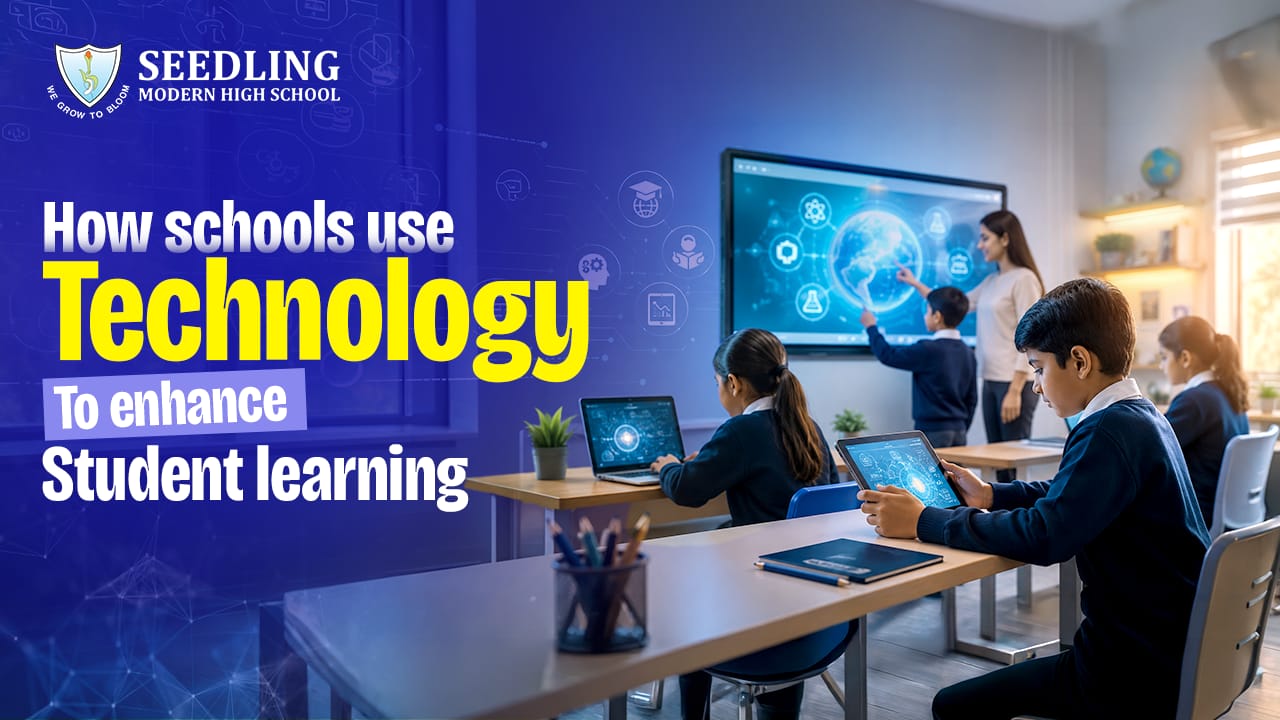
As parents, we all want our children to learn in an environment that prepares them not only for exams but also for life. Today’s world is more connected than ever, and classrooms are evolving to reflect that change. This approach also aligns with the National Education Policy (NEP) 2020, which encourages the thoughtful integration of technology to improve teaching, learning, and overall educational outcomes.
When parents search for the best school near me in Jaipur, they often look beyond infrastructure and academic results. Parents today also want to understand how schools use technology to make learning more engaging, encourage creativity, and strengthen conceptual understanding.
In This Article
Why Technology in Classrooms Matters to Parents
Most parents aren’t looking for schools that use technology for its own sake. Most parents are looking for something simple: children who stay curious, who understand concepts instead of memorising them, and who leave school ready for a world that runs on digital tools.
When used well, technology doesn’t replace good teaching; it strengthens it. A teacher explaining photosynthesis with a static diagram is helpful. The same teacher using an interactive simulation, where students can change light or water levels and watch the plant respond, turns a passive lesson into an experience the child remembers.
Admissions Open
Give Your Child the Best Start
Join Seedling Modern High School and unlock a world-class learning environment built for tomorrow's leaders.
Apply for Admission →One of the biggest advantages of technology is the way it transforms everyday classroom experiences.
Making Classrooms More Engaging
From Passive Listening to Active Participation
Smart boards, digital quizzes, and classroom response tools have changed the rhythm of a typical school day. Instead of one child answering a question while thirty others wait their turn, every student can respond at once through a tablet or clicker, and the teacher instantly sees who has understood the concept and who needs more support.
This shift matters because engagement is often the difference between a child who dreads a subject and one who looks forward to it. A restless child sitting quietly at the back of the classroom is less likely to go unnoticed because teachers can identify participation and learning gaps in real time.
Learning Through Doing, Not Just Reading
Science labs with digital simulations, coding platforms for young learners, and virtual field trips to places a school trip could never reach; these aren’t luxuries anymore. They give children a hands-on relationship with knowledge, which tends to stick far longer than anything read silently from a textbook.
This hands-on approach reflects the National Curriculum Framework (NCF) 2023, which encourages experiential, inquiry-based, and technology-enabled learning to help students build deeper conceptual understanding rather than rely on rote memorisation.
Beyond making lessons engaging, technology also helps teachers meet the individual learning needs of every student.
Personalised Learning: Every Child Learns Differently
One of the most meaningful shifts technology has brought to schools is personalisation. No two children learn at the same pace, and for years, traditional classrooms struggled to accommodate that reality.
Adaptive learning software now allows a child who grasps fractions quickly to move ahead, while a classmate who needs more time gets extra practice without feeling singled out. Teachers can quickly identify areas where students may need additional support through simple dashboards, which means intervention happens early, before a small gap becomes a lasting one.
For parents, this aspect is often the most reassuring part of the technology conversation. It’s not about screens; it’s about attention. Every child is getting the pace and support they actually need.
Technology supports not only academic achievement but also the skills students need beyond school.
Building Future-Ready Skills
Digital Literacy Builds Future-Ready Learners
Whatever career path a child eventually chooses, digital comfort will be part of it. Schools that thoughtfully integrate technology, teaching students to research responsibly; use tools like spreadsheets, presentation software, and basic digital tools; and understand basic coding logic,are quietly preparing children for a world of work that looks nothing like the one we grew up in.
Technology Encourages Creativity
Technology also gives children new ways to express ideas through video projects, digital art, podcasts, or simple app-building exercises. These aren’t distractions from “real” learning; they teach planning, storytelling, and problem-solving in ways worksheets rarely can.
Digital Tools Strengthen Collaboration
Group projects have always been part of school life, but digital tools now let students collaborate on a shared document, divide research tasks, and combine their work seamlessly, where appropriate, both inside and beyond the classroom. This mirrors how most modern workplaces actually function, and it teaches children something textbooks can’t: how to build something together.
The benefits of technology extend beyond the classroom and strengthen the partnership between schools and families.
Technology Improves Parent-School Communication
Perhaps the change parents notice most directly is communication. School apps and parent portals now offer real-time updates on attendance, homework, test scores, and teacher feedback, instead of parents waiting for a term-end report card to understand how their child is doing.
This matters enormously for busy families. A quick notification about a missed assignment, or a teacher’s note flagging that a child seems distracted lately, allows parents to step in early and supportively, rather than discovering issues months later.
While technology offers many advantages, responsible and balanced use remains equally important.
Safety Cannot Be an Afterthought
Naturally, technology in schools also raises questions about screen time, data privacy, and online safety. Parents are right to ask these questions. A responsible school will have clear policies on internet filtering, supervised device use, age-appropriate content, and limits on screen exposure, especially for younger children. Technology should be a tool used with intention, under guidance, not an unsupervised, unrestricted use.
In India, initiatives such as DIKSHA, developed by NCERT under the Ministry of Education, provide teachers and students with access to high-quality digital learning resources while promoting the safe and effective use of educational technology.
At Seedling Modern High School, we put these principles into practice.
How SMHS Integrates Technology in Learning
At Seedling Modern High School (SMHS), technology is thoughtfully woven into everyday learning to make lessons more engaging, interactive, and relevant. The focus isn’t simply on using digital tools but on helping students understand concepts better, stay curious, and develop the skills they’ll need in an increasingly digital world.
Interactive Classroom Learning – Smart boards, videos, and digital content make classroom lessons more engaging and easier to understand.
Personalised Learning Support – Teachers use technology to track students’ progress and provide timely support based on individual learning needs.
Better Concept Clarity – Animations, simulations, and multimedia resources help students understand complex topics through visual learning.
Learning Beyond the Classroom – Digital resources and online activities encourage students to explore subjects beyond their textbooks.
Building Digital Literacy – Regular exposure to technology helps students develop essential digital skills and responsible online habits.
Continuous Assessment and Feedback – Digital tools enable teachers to monitor learning, identify gaps early, and provide regular feedback.
Safe and Responsible Technology Use – Students are guided in cyber safety, digital etiquette, and the responsible use of online resources.
Stronger Parent-School Communication – Digital platforms help parents stay informed about attendance, academic progress, school events, and important updates.
Final Thoughts
Technology, in the end, is not a replacement for a caring teacher who notices when a child is struggling, or for the quiet moment when a student finally understands something they’ve been working hard at. It’s a tool that helps good teaching become even more effective, one that makes it more effective, more personal, and more visible to parents like us.
When schools use it thoughtfully, with safety and balance at the center, technology doesn’t take away from childhood or learning. It simply gives every child a better chance to be seen, supported, and prepared for what comes next.
FAQs
1. How does technology enhance student learning?
Technology makes learning more interactive, engaging, and easier to understand through digital tools and hands-on activities.
2. Does technology replace teachers in schools?
No. It supports teachers by improving classroom instruction while educators continue to guide and mentor students.
3. Is technology safe for children in schools?
Yes, when used responsibly. Schools ensure safe learning through supervised access, secure platforms, and digital safety practices.
4. How does technology help different types of learners?
It allows students to learn at their own pace with personalized lessons, practice, and instant feedback.
Ready to Enrol?
Begin Your Admission Journey
Seats are limited. Secure your child's place at Seedling Modern High School today.
Enquire Now →Written by
SPS Editorial Team
SPS Editorial Team creates trusted educational content for Seedling Public School (SPS). Our articles are developed with insights from experienced educators and academic professionals, ensuring every piece is accurate, practical, and relevant. We are committed to providing reliable resources that support students, parents, and lifelong learning.