How Schools Support Emotional and Social Development
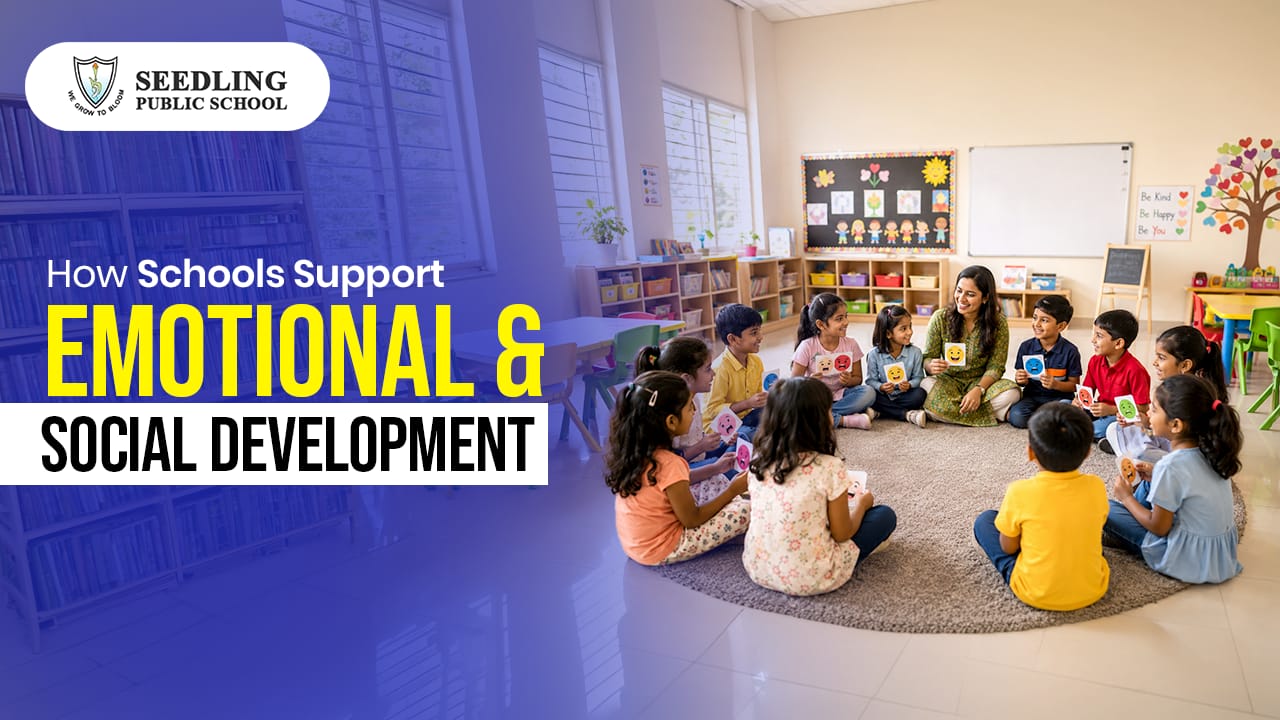
As a parent, you want your child to do well in academics, but you also want them to feel confident, make meaningful friendships, and grow into a kind, confident, and responsible individual. That’s why emotional and social development is just as important as classroom learning. A good school supports your child’s overall growth by creating a safe, inclusive, and encouraging environment where they can build confidence, communication skills, empathy, and resilience.
Understanding how schools nurture these qualities can help you choose a learning environment that supports your child’s success both inside and outside the classroom.
In This Article
Understanding Emotional and Social Development
Every child grows best in an environment where they feel valued, supported, and encouraged to express themselves with confidence. While academics play an important role, a child’s ability to understand emotions, build friendships, and communicate with others is equally valuable. Emotional and social development gives children the life skills they need to succeed both inside and outside the classroom.
This approach aligns with the National Education Policy (NEP) 2020 and the National Curriculum Framework (NCF) 2023, both of which emphasize holistic development, life skills, and student well-being as essential components of quality education.
Admissions Open
Give Your Child the Best Start
Join Seedling Modern High School and unlock a world-class learning environment built for tomorrow's leaders.
Apply for Admission →Emotional development helps your child:
- Express feelings with confidence instead of becoming frustrated or overwhelmed when things don’t go as planned.
- Develop self-confidence by believing in their abilities and feeling comfortable trying new experiences.
- Handle setbacks positively, whether it’s losing a competition, making mistakes, or facing everyday challenges.
- Build emotional resilience, helping them recover from disappointments and approach future situations with a positive mindset.
Social development helps your child:
- Build meaningful friendships by learning how to share, cooperate, and communicate with others respectfully.
- Work well in teams, whether during classroom activities, sports, or extracurricular programs.
- Develop empathy and kindness by understanding different perspectives and showing care for others.
- Resolve disagreements calmly, learning to listen, communicate, and find positive solutions instead of reacting emotionally.
- Feel comfortable in different social situations, giving them the confidence to participate, ask questions, and express their ideas.
The Impact of Social and Emotional Learning
Social and Emotional Learning (SEL) helps children build confidence, manage emotions, develop healthy relationships, and make responsible decisions through everyday classroom experiences such as teamwork, collaborative projects, group discussions, role-play, and reflective learning.
| Benefit | How It Helps Your Child | Official Source |
| Builds confidence and emotional well-being | Children learn to understand and manage their emotions, helping them become more confident, emotionally secure, and ready to face new experiences. | UNICEF – Early Childhood Development |
| Strengthens friendships and communication | Social and emotional learning helps children develop empathy, build positive relationships, communicate effectively, and work well with others. | CASEL – SEL Framework |
| Develops important life skills | Children strengthen skills such as teamwork, responsible decision-making, self-awareness, and problem-solving that support success in school and everyday life. | CASEL – SEL Framework |
| Improves learning and future success | Strong social and emotional skills help children engage better in learning, thrive in school, and contribute to their long-term well-being and future opportunities. | OECD – Early Learning and Child Well-being; UNICEF |
How Parents Can Support Emotional and Social Development at Home
Every child learns and grows through the experiences they have each day at home. The support, conversations, and encouragement they receive from parents help them become more confident, express their emotions better, and build meaningful relationships.
- Listen with patience so your child feels comfortable expressing their thoughts, emotions, and concerns without fear of being judged.
- Make time for meaningful conversations by asking about their day, their friendships, and their experiences at school to build trust and emotional security.
- Appreciate effort and progress to help your child develop confidence, resilience, and a positive mindset instead of focusing only on results.
- Encourage independent decision-making by allowing age-appropriate choices that strengthen responsibility, confidence, and problem-solving skills.
- Support participation in extracurricular activities that help children develop teamwork, communication, leadership, and social confidence beyond the classroom.
- Model kindness and respect every day because children learn empathy, compassion, and positive behavior by observing how their parents interact with others.
The SMHS Approach to Emotional and Social Growth
A child’s emotional and social growth thrives when they feel safe, supported, and encouraged every day. At Seedling Modern High School (SMHS), learning goes beyond academics to help children build confidence, empathy, communication skills, and resilience. If you’re searching for a CBSE school near me, Durgapura, Jaipur, choose a school that values your child’s overall growth as much as their academic success.
- A welcoming and inclusive environment—Every child is made to feel respected, valued, and included, creating a strong sense of belonging that encourages emotional security and self-confidence.
- Teachers who guide with care – SMHS teachers build positive relationships with students, helping them express their feelings, overcome challenges, and develop the confidence to participate actively in school life.
- Collaborative learning experiences—Through group discussions, classroom projects, and interactive activities, children learn to communicate effectively, work as a team, and respect different opinions.
- Sports and co-curricular activities that build character—Participation in sports, cultural programs, clubs, and school events teaches children discipline, leadership, resilience, and the importance of supporting one another.
- Opportunities to lead and take responsibility—Leadership roles, school initiatives, and event participation encourage students to make decisions, take ownership of their actions, and grow into responsible individuals.
- Equal focus on academics and well-being—Alongside academic learning, SMHS places importance on nurturing emotional well-being, ensuring children develop the life skills needed to succeed both inside and outside the classroom.
- A strong partnership with parents—By maintaining open communication with families, the school works together with parents to support every child’s emotional, social, and academic journey.
Final Thoughts
Picking up, the ideal education atmosphere is perhaps one of the prominent considerations that you would make for your child. If you’re looking for a CBSE school near me in Durgapura, Jaipur, consider a school that nurtures your child’s emotional, social, and academic development. At Seedling Modern High School, students are encouraged to grow into confident, compassionate, and responsible individuals who are well prepared for the future.
Frequently Asked Questions
1. At what age should schools start focusing on emotional and social development?
From the earliest years, even in pre-primary classrooms, simple routines like sharing, taking turns, and naming feelings lay the foundation for later emotional skills.
2. How can I tell if my child’s school actually supports this and isn’t just claiming to?
A school’s commitment is reflected through regular SEL activities like circle time, teamwork, mindfulness, and role-playing, along with caring teachers and parent meetings that focus on overall child development, not just grades.
3. Does focusing on emotional development affect academic performance?
No, it typically supports it. Children who feel emotionally secure tend to concentrate better, participate more, and handle academic pressure with greater resilience.
4. What can I do at home to support what the school is doing?
Simple habits help, like asking open-ended questions about their day, naming your own emotions out loud, and avoiding jumping straight to solutions when your child shares a problem.
5. Should I worry if my child seems shy or struggles socially at school?
Not necessarily. Every child develops social confidence at a different pace. What matters is whether the school notices and gently supports that growth rather than overlooking it.
Ready to Enrol?
Begin Your Admission Journey
Seats are limited. Secure your child's place at Seedling Modern High School today.
Enquire Now →Written by
SPS Editorial Team
SPS Editorial Team creates trusted educational content for Seedling Public School (SPS). Our articles are developed with insights from experienced educators and academic professionals, ensuring every piece is accurate, practical, and relevant. We are committed to providing reliable resources that support students, parents, and lifelong learning.